Thursday, March 29, 2012

200 or so pages of The Years of Rice and Salt

As I've mentioned in previous posts, I have been exploring my interest in sci-fi, and particularly the dystopian novel. This interest began for me in high school when I read books such as Farenheit 451 and 1984. For many years I followed other pursuits and it has only been recently that I have begun to go back to this area of interest. The book that I am reading now, The Years of Rice and Salt by Kim Stanley Robinson, is something of a departure for me. Although KSR is well known for his sci-fi writing, this novel would more accurately be called a speculative or alternate history. The novel consists of ten books which recount the history of the world, but a world in which the black plague wiped out almost all of the population of Europe and Asian cultures took a place of dominance instead of Western Christianity. KSR uses the concept of reincarnation to provide a sort of continuity in the novel. Each book features a reincarnated version of the same two central characters who are inextricably bound together in a karma group. This device helps to convey the arc of history that KSR builds over the course of the novel because each individual book is tightly encapsulated: the narrative begins at some point in the lives of the characters -- sometimes detailing how they met, other times not -- and ends with their deaths. The result is that the overarching revised history is left largely implied.
KSR finds inventive ways of restating this large theme within the episodic narratives of the individual books. For example, the third book titled "Ocean Continents" focuses on a fleet of Chinese treasure ships that have gotten lost at sea and come across an island in the middle of the Pacific Ocean that has not been encountered before. The sailors, having brought small pox with them to the island, infect the islanders and end up taking a young girl with them for their return to the mainland. Kheim, one of the recurring characters wonders if they are justified in taking the girl away from her home even though this means saving her from the certain death that many of her family will face. Kheim considers the speed with which the girl, whom they call "Butterfly," adjusts to life on the ship, which parallels the reader's experience of reorienting, or adjusting, to each new life that the characters appear in. The reader is put into the paradoxical position of knowing more and less than the central characters. The reader knows more because he/she sees the broad arc of the novel, but knows less because the individual lives within each of the books is very minimally glossed. The reader is then forced into a position from which they can see the big picture, the broad historical perspective, but miss out on the intricacies of the lives of the characters presented. This contributes to KSR's purpose because the characters are in tune with reincarnation and often recognize that a single lifetime is a small aspect of the entire "life" of a soul.
The book is fascinating so far. I found it a bit jarring to read at first but it only took the first couple of transitions between historical ages and characters to catch on to the conceit of the novel. The two concepts that interest me the most in the novel are the treatment of character and the treatment of history. KSR develops a complex reimagination of history through his inventive use of "character" in a completely non-traditional way.

Friday, March 2, 2012

"The brittle things of March"

The forecast of bad weather held us back from making a trip to the east today; after last year's hail storm (with larger-than-golf-ball-sized hail), I am more cautious. Nothing much has happened yet, but nonetheless--the day has been good for looking back over some forgotten poems.

A friend recently remarked that it's difficult to understand poetry without knowing the poet; I argued that this is not the case, and that in a good poem, there are many things to grasp hold of, make meaning from.

I first read Joseph Enzweiler's A Curb in Eden almost eight years ago--before I understood the work of a farmer, or began listening to the land in the same way that he does in his poems. Reading the poems now, I know that the wind and the mud aren't abstractions. However, there is still much in this simple poem that is foreign to me--and maybe this very fact is part of the reason for my enjoyment (of any poem).


The Wind

I've been standing here all my life
by the road that day in March
and never knew till now.
Phone lines hold their breath.
Above the neighborhood
a hammer is lifted.
Swifts fall silent in the chimney.
Children on the lawn
are blurred, their faces
delicate as cups.
In the market aisle
a secret waits half-told.
A doorknob turns.
Cars intent on evening
as supper cooks.
Watch hands.
The smell of bread.

As the bus pulls away
in a black roar of diesel,
from its window
you smile at me and wave.
We are fifteen.
My face is cold.
The mud smells warm
with spring and rotten grass.
Four o'clock.
The potholes shiver with rain.

In glass dark and shifting,
clouds rush across your face
like faraway countries
taking you, faster now
until you are dust,
a metal frame of sky.

I never heard the hammer fall,
a garage door shut, the eyes
complete their journeys.
I thought I could always find you there
in the same green coat,
though it's we who are the wind.

I turned home past the locust trees
through the broken gate.
Our steel fence hissed in vines,
sun glazed the pear tree.
The brittle things of March
filled me, and the mud
on my shoes felt light.

That night at supper my family
ate the same in their same chairs.
But for me the fish was beautiful
and sweet  opened with my fork.
They could not see.
I never spoke, though my blood
was curving to the sky.

Tuesday, February 21, 2012

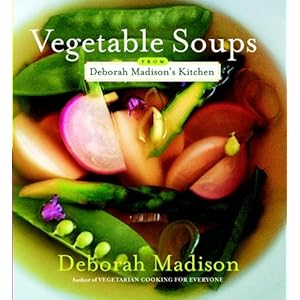
Deborah Madison, You've Done It Again!


Vegetable Soups from Deborah Madison's KitchenI was making yet another soup from Deborah Madison's wonderful cookbook Vegetable Soups, when Matt commented, "She certainly likes the squash with the root vegetables." I paused and thought about the soup: it's a navy bean soup with turnips, winter squash, onions, sage, parsley, and savoy cabbage. The beans are cooked first, with onion, garlic, and other aromatics. All in all, the soup is simple, but delicious--just like many of the soups in the cookbook. It was already obvious, but on this late February day, it struck me even more--all the recipes are seasonal. The soup I was making was a classic winter soup, and the squash, sage, parsley, and turnips were all grown by me at some point; they were just waiting patiently for this moment to arrive. The onions, garlic, and cabbage could have also been obtained locally, but I've eaten through all my stores of those. 
If you're at all interested in vegetarian, seasonal, local cooking, I recommend that you get this book. I know it's a few years old, but it's far from being outdated. As for me, I'm looking forward to the spring soups, especially ones with the sugar snap peas...

Sunday, February 12, 2012

Pressure Canning Workshop


When I talk to people about canning, more than a few express a slight fear of the process; and although there are certainly dangers involved in water-bath canning, nothing terrifies people more than pressure canning. There's just something about putting up non-acidified foods and the menacing-looking pressure canner that stops people from ever trying to preserve using this method. 

I, too, was once afraid of the pressure canner. However, with a few practice runs I felt confident enough to can a variety of items--from stock, to soups, to corn. And my endeavors into pressure-canning have been incredibly worth-while: I have local corn to use year-round; a fulfilling dinner is minutes away with tomato or lentil soup. I have vegetable stock on-the ready for winter soup-making. Eating well is easier with a pressure-canner. 

I am happy to offer a workshop on pressure-canning, so those wanting to learn can do so before the bounty of spring and summer comes rolling in. During this workshop we will can vegetarian lentil soup, discuss pressure-canning methods, and talk about pressure-canning other items. The class costs $35 (payable in advance of the class date) and includes a print-out of basic canning instructions and the recipe, as well as a jar of the soup. Although the class is most suitable for someone already familiar with canning, I will not discourage novices from attending. 

The class will be capped at 10 people; you must reserve your space in the workshop through purchasing a "ticket" through the PayPal link (you do not need a PayPal account to buy). Also, RSVP to me, the instructor, to let me know you're coming. Space in the workshop is not guaranteed if you have not reserved your spot. Please do not hesitate to contact me if you have any questions. I look forward to the workshop!***


***UPDATE***
When announcing this workshop in the middle of February, I had no idea how busy March was going to be for me, or how many weekends I'd be working at Beardsley Farm. For now, I still plan to hold the workshop, but it will probably take place in April or May--please stay tuned for details, and don't hesitate to contact me if you're interested in taking the class!

Tuesday, January 31, 2012

Overwintering Peppers

One of my two Manzanos
Last fall, I learned that peppers can be grown as perennials. (Daniel has written on this, too.) I was fascinated with the prospect of having year-round chiles, and so decided to overwinter a few plants. (And by a few, I mean about a dozen, some of which were easily three feet tall, and in 18" pots.) Since October, when I took them in, two thirds of the plants have mysteriously died. I'm not sure if it had to do with the diminishing amount of light in our house, or the constant harassment by our cats, but one by one, eight of the pepper plants withered. Perhaps it was because I was taking in someone else's plants, and giving them a kind of care they were not used to. For weeks, the death of the plants bothered me constantly; but now, I look at the four surviving plants, and am glad to see them alive, if not quite thriving.

My own personal woes aside, overwintering chiles is pretty miraculous. And even the concept seems almost familiar. So many of the people I've talked to about this have mentioned remembering--sometime, somewhere--a tiny, decorative indoor chile plant. And if it can be done with small chile plants, why not bigger ones? The key is steady fertilizing, watering, pruning, and pest control. I'm being vigilant and hope that my chile plants will make it until Spring.

Monday, January 30, 2012

Yesterday's Canning Workshop

Filling jars with white wine chile jelly.
Securing the lids and rings.
 Yesterday's class reminded me why I started teaching canning in the first place. The energy in the cozy and familiar Birdhouse kitchen was really quite empowering--everyone was interested to learn about canning, and had a lot of questions. A couple people were already familiar with the process of canning, but had questions about the specific recipes (of the mustard and chile jelly that we made) and pressure canning. All in all, I am glad that I've made a return to teaching workshops. I'll definitely have another one in February or March. Thanks, everyone, for coming, learning, and showing your support.

Tuesday, January 24, 2012

Pie Love

Two weeks ago, I became very excited about and consequently purchased a pie book. I've made pies a few times previously, and although they have always been very good, I've never gotten to be quite so enamored with pies (as enamored as others are? as enamored as I could be?). For one, I've been making simpler, less fatty pie crusts (not knowing how the fattier, flakier crusts are quite the pay-off for the effort). And then, as I said, I'd never made that many pies. The book was almost a personal challenge to make more pies, and in the ten (or so) days that I've had it, I've made two pies. The first was a maple-blueberry pie, made with blueberries that my friend Alicia and I picked in the heat of summer last year. Because I used frozen berries, the pie was a little runny, but the flavor made up for the small failure.

On Sunday, I made the maple-pecan pie you see pictured above. I'm certain that I've only had pecan pie one other time in my life, and wasn't thrilled about it then. But now! Now, I am in love with pie. Alicia helped me make this pie, and upon tasting it told me that it is not as sweet as pecan pies usually are. It's sweet in the complex combination of good sugar, molasses, and maple syrup. The pecans are good quality. The crust is also exceptional, if I may say so.

I'm sure that in the next week I'll make another pie--there's no stopping me. I've made enough cookies and cupcakes and cakes to be a little bored with them. But pie, pie is new.  In the summer, I will be diligent about saving fruit for pies--it'll be a new addition to the routine. For now, I'll use what's at hand and extend the pie challenge to you; will you consider making a pie this year (or this month, or this week)?

Thursday, January 19, 2012

Dystopian Novels: Samuel Butler, Religion, and Erewhon

I have been reading a lot of post-apocalyptic, utopian and dystopian novels over the last year. Most of the ones that I have been reading I have read in the past but wanted to take a fresher look. My interest was first sparked after I read Cormac McCarthy's The Road. There was something about the sparse narrative that was well suited to the horror of the story. Maybe I unfairly lump together post-apocalyptic and dys/utopian novels, but they seem to me to share a speculative nature and to, in some ways, have a similar goal of positing a world that is different from our but that looks back on and critiques ours.
The most recent book that I have re-read is Samuel Butler's 1872 novel Erewhon. I first read this book in a 19th century British literature course in my undergrad. I was not impressed with it at the time, which is one of the reasons that I wanted to return to it. I think that I may not have given the book its due when I first read it; I was not terribly interested in 19th century British novels. My interested was also re-kindled in this book after reading a passage about it in Wayne C. Booth's A Rhetoric of Irony in which Booth discusses the paradoxical position on the narrator regarding his stance toward religion. But I'll return to this in a moment.
Much of Erewhon is as I remember it. It is presented as a travelogue. The narrator travels into the unexplored interior of some continent (he does not specify), finds a civilization that has not yet been contacted by the West, lives amongst the people for a time, and then returns to England hoping to make his fortune from his experiences. One of the key differences between this discovered civilization and the one the narrator comes from is that crimes are treated as though they were diseases and vice versa (this is Butler's device to criticize what he sees as the punishment of misfortune under the guise of criminality). One element that I did not notice on that first read is Butler's criticism of religion along with these other elements. At one point Higgs, the narrator, believes that the Erewhonians are one of the lost tribes of Israel and he vows to either make a name for himself by converting this lost tribe to Christianity and thus showing himself to the be equal of the Old Testament prophets or to sell his story and then exploit the natural resources of the unknown country to his own massive profit.
Butler presents this situation less to criticize the institution of religion than what he sees as the duplicity of its adherents. Higgs plans to take full advantage of his fortuitous discovery in whatever way is most advantageous to himself. Rather than desiring to convert the Erewhonians for their own salvation, he desires to convert them for his personal fame. Add to this the fact that he would then elevate himself to the level of the most important Biblical prophets, laying bare his selfish intentions. Higgs relates this to the reader unselfconsciously; he believes that he will be praised for his initiative and business sense.
Booth writes of a critique that is more subtle but exposes Butler's ironic intention in the work. After escaping a difficult situation, Higgs says ". . .As luck would have it, providence was on my side." Booth's point is that Higgs attribute his salvation to both luck and God, clearly a contradictory statement. Booth continues to parse the semantic advantages of Butler's selection of the word "luck" over "fortune" and "providence" over "God," but the point remains. In this example, as in the one I cited above, Higgs professes a kind of piety that he seems not to actually feel. Had his beliefs been true, he would have sought to convert the Erewhonians whatever the benefit to himself and he also would have attributed his salvation to God alone. The fact that he does not -- and these are just two examples of many -- indicates that his professions and his true beliefs do not match up.
Although religion is not Butler's primary focus in this social allegory, it is an important element of the text. His method of treating religion is fairly standard in dystopian texts of this kind, however. For the critique to be effective, Higgs must remain unaware of his hypocrisy. This should, ideally, lead to the reader's questioning his or her own beliefs to determine whether or not they match up with his or her actions.

Since the dystopian novel has been a fascination for me lately and because I have been thinking about them a lot, I have planned a series of posts about both utopian and dystopian literature. This may end up including some post-apocalyptic stuff, too. Coming up: some general thoughts about utopian and dystopian literature, a segment on Aldous Huxley's Brave New World, narrative technique in dystopian novels, and much more.


Tuesday, January 3, 2012

Mustard and Jelly Canning Workshop

Today was probably the coldest day of the winter, so far. It was the kind of day that made me long for the scorching days of summer, many of which I spent preserving the season's fruit and vegetables. Standing in front of the stove laden with multiple steaming pots, I wished for a break; now that I am consuming the contents of all those jars, I look forward to canning again.


The winter is certainly a good time to rest and collect ideas for the upcoming year; thus, it is a great time to learn how to can--or to practice canning--without the pressures of imminent harvest and piles upon piles of produce. Winter canning has a different, less frantic pace, and I'm very glad to be teaching a canning workshop now. During this workshop, we will make two items: a garlic & lemon mustard and a habanero wine jelly. Both of these have a complex flavor, while being relatively easy and fun to make. 


The class costs $22 (payable in advance of the class date) and includes a print-out of basic canning instructions and the recipes, as well as a jar of each of the items--the jelly and the mustard. The class is appropriate for any level of canning enthusiast.


The class will take place on Sunday, January 29th from 1:30-4:45 at the Birdhouse (800 North 4th Neighborhood Center). 


The class will be capped at 12 people; you must reserve your space in the workshop through purchasing a "ticket" through the PayPal link (you do not need a PayPal account to buy). Also, RSVP to me, the instructor, to let me know you're coming. Space in the workshop is not guaranteed if you have not reserved your spot. Please do not hesitate to contact me if you have any questions.

Monday, January 2, 2012

Wild Fermentation

Sandor Katz
About a month ago, the Beardsley farm team and I had the chance to attend a Local Food Summit in Nashville, TN. Sandor Katz was one of the invited guests, and led a brief fermentation workshop. In addition to demonstrating the process of making a radish kraut and talking about the history of fermented products, Katz explained that we are in the midst of a very misguided cultural moment that wages war on bacteria. "In fact," he exclaimed, "much of the bacteria that surrounds is is not harmful!" And by creating bacteria-killing agents, we are depriving ourselves of the beneficial bacteria that help us digest food more efficiently, or fight off diseases, or reduce our bodies' toxicity.  "We, more so than any of our predecessors, need to be conscious of re-populating our bodies with beneficial bacteria," Katz urged.

This is a very important perspective to foster in a time when sanitizing wipes and antibacterial soaps abound--we get so carried away with killing off microorganisms, that we forget how important they are to our well-being and survival. It was also helpful to be reminded about the plethora of different fermentation methods; as a canning enthusiast, I sometimes overlook alternative ways of food preservation. So maybe it's about time that I try making beet kvass, or something else outside of my usual repertoire...

I have had Katz's book Wild Fermentation for a year and a half--about as long as I've been seriously into the process of fermenting--and recommend it to anyone who is interested in the process of fermentation. Katz also has a forthcoming book that will be even more extensive in scope and cover fermentation practices from various cultures.

I am so very glad that I had a chance to meet Sandor Katz and hear him talk about the subject he is so passionate about. Here's to a new year full of beneficial microorganisms!

Monday, October 3, 2011

An experiment in student engagement

I presented an extra credit opportunity to my class today to try to entice their interest in the analysis of poetry. The assignment runs like this: they select from a list of songs that I provide them to prepare a presentation for the class in which they get to play the song and then give an analysis of one verse and chorus using the various poetic elements that we've been discussing in class. This isn't so out of the ordinary, I've heard of other instructors using this method in class, particularly for lower-level courses (mine is a freshman writing course with an emphasis on literature). To make this interesting for myself as well as my students, I've selected songs that I like and I want to hear in class. Here are the songs I've chosen:

"A New England," and "To Have and Have Not" by Billy Bragg,
"Career Opportunities" by the Clash,
"99 Problems" by Jay-Z,
"There is a Light that Never Goes Out" by the Smiths,
"I Hung My Head" by Johnny Cash,
"Don't Worry about the Government" by Talking Heads,
"A Fond Farewell" by Elliott Smith,
"Hang Down Your Head" by Tom Waits,
"She's Lost Control" by Joy Division, and
"Wave of Mutilation" by Pixies.

My criteria for choosing these was that they must have a distinct verse and chorus (to provide structural variation), could not be too repetitive (this alone ruled out much of Joy Division's catalogue and all of the Ramones), could not be too esoteric that the song could not be found free somewhere online, and, if possible, I went for better known songs by the band if it met other requirements. I wanted to include more hip hop, but was a little embarrassed by how dated my collection is, which is odd considering I have no problem at all including Bragg, the Clash, Joy Division, and the Smiths. I've already made a playlist of these songs and find that they hang together quite well.

My goal is that my students will gain an appreciation for the broader applicability of the analytic methods we've been practicing in class and be able to recognize the poetry that surrounds them. Maybe they'll find some new music they like as a bonus.

Wednesday, September 14, 2011

Fallow

Transplanting brassicas.
This year, I've devoted quite a bit of time and effort cultivating my online presence (although not lately). I've posted to this blog frequently, made connections with like-minded people, and kept up some great conversations. And for the most part, I've been missing lately.

Part of the reason for my absence is the (physically and emotionally demanding) full-time job at Beardsley Farm. I like what Beardsley does for the Knoxville community and I'm glad to be there.

This summer, I started visiting and working (volunteering time) at the farm where we've been getting our CSA for the last three years. Most recently, I've also put in a couple of days of work at another farm, working with Jim and his hot peppers. My time at the first farm started a change in me, and I'm not sure what to call it yet. It's a different awareness of farmers and their work, but that's not all. Being at both farms makes me exuberant and incredibly sad. I am so glad to have the chance to spend time with such hard-working and earnest people, but I hate to see them almost constantly so behind in their work. Jim, especially (because he tends his farm alone), tends to get discouraged. And all this has started affecting me personally--I want them to succeed, to be appreciated. More than anything, I want to help them. And for now, this means going to lend them my hands, my younger and less-tired body.

I hope you understand. I may not be around online as much. I may not offer canning classes for a little while. Please understand that I'm trying to put in effort where I think it'll count most.

Wednesday, September 7, 2011

Sudden, red.

Karina, Jim with his fermented Tennessee Cherry peppers, and Sarah
This past Monday a group of AmeriCorps volunteers and I visited Jim Smith; because it was continuously rainy, we ended up helping Jim take care of things inside the house, rather than helping him on the farm. We readied peppers for the dehydrator and learned about their various flavors and uses.  Jim has had a difficult few years, as he is operating the farm alone. Nevertheless, he keeps going.

What I love about this picture is that while the women are working, Jim has opened a large jar of fermenting Tennessee Cherry peppers, and is smelling a spoonful of the spicy brine. It makes me think of a Robert Hass poem from Time and Materials.


The Problem Of Describing Color

If I said--remembering in summer,
The cardinal's sudden smudge of red
In the bare gray winter woods--

If I said, red ribbon on the cocked straw hat
Of the girl with pooched-out lips
Dangling a wiry lapdog
In the painting by Renoir--

If I said fire, if I said blood welling form a cut--

Or flecks of poppy in the tar-grass scented summer air
On a wind-struck hillside outside Fano--

If I said, her one red earring tugging at her silky lobe,

If she tells fortunes with a deck of fallen leaves
Until it comes out right--

Rouged nipple, mouth--

(How could you not love a woman
Who cheats at the Tarot?)

Red, I said. Sudden, red.

Thursday, September 1, 2011

Saving Seeds


Daniel, saving seeds from an over-ripe zucchini.

I've posted about saving seeds a few times already--herehere, and again in my most recent post. The thing is, all of those posts are fairly general, or focus on a specific event, rather than the specific action of saving seeds. I feel very strongly about saving seeds, even though I'm fairly new to it. There's something autonomous about the action--yes, there are great seed companies out there, and I have written in praise of a couple Etsy seed sellers; nonetheless, saving seeds is a logical step in the cycle of growing. When I save seeds, it allows me to get to know the plant better. I learn to look at the fruit/plant health not just in terms of what will be useful for eating, but also in terms of quality of seed. Sometimes we forget that plants are not only food producers, but also self-perpetuators. Also, saving the seeds from something usually yields a lot more seeds than are usually in a seed packet.

Before beginning to save seeds, it is important to know whether the plant you wish to save from is an heirloom (or open-pollinated) or hybrid. Heirloom and open-pollinated plants produce seeds that will re-create the plant variety true to type. So if you have a Cherokee Purple tomato and save seeds from it, the seeds will grow into a Cherokee Purple when planted. Hybrid plants, although often seemingly strong and perfect, will produce seeds that will not have the complete genetic information from the plant; when planted, seeds from hybrid plants will often make a plant that reverts to the characteristics of one of the parent plants. For example, if you save seeds from a SunGold tomato and plant them, you may have a couple plants that are scrawny, a few plants that produce tomatoes quite unlike the SunGold (too small, and probably not very sweet), etc. When I was saving seeds last year, I didn't know about this, and saved a lot of SunGold seeds. Most of the plants from those seeds weren't strong enough to survive hardening off, and once I realized that I'd planted a hybrid, I got rid of the remaining 2 plants, not wanting to nurture a plant that would later disappoint me. 

Once you know that the plant is open-pollinated or heirloom, you can proceed to saving seeds. Last year, I saved the seeds of sweet peppers and squash, seeds that I'd usually discard. (I later learned that squash cross-pollinates very easily, but not until I grew some strange--but edible--mystery squash.) So far, at Beardsley Farm we have saved the seeds of okra, zucchini, cucumber, and sunflowers. All of these have very evident seeds that are easy to save. All that it took to save the seeds was cutting or splitting the vegetable and taking out the seeds. We had to dry the seeds of the cucurbits, but the okra and sunflower seeds were already dry, so all we had to do was collect them.  Also, you should select the seeds from the most ripe and most perfect fruit. If you have seen the seeds of a plant (during planting time), you know what they should look like as you collect them. For example, okra seeds are dark greenish-black, whereas in edible young okra, the seeds are white; as the okra pods mature and become too tough to eat, the seeds mature, too. Finally, when the okra pods dry out, the seeds are ready for saving. This process is similar with cucurbits--wait until they are ripe (for cucumbers and summer squash, they should be ripe beyond what is acceptable for eating), and then collect seeds, drying them out as necessary. Saving tomato seeds is a little more involved, but there are resources out there to help you with that, too. 

Once you have saved the seeds, make sure they are dry and ready for storage. I've been storing my seeds in small jars or paper envelopes. The very things a seed needs to germinate--light, water, soil--are the opposite of what a seed needs to remain dormant. Saved seeds need dark, cool, and dry storage areas. 

I wish I could write more about saving seeds; I have become quite passionate about it. I try to save many different kinds of seeds--just earlier in the week, I plucked a dried out marigold flower, and saved the seeds from it. There's something wonderful about noticing the cycle of plants and helping them continue it. Keep an eye open for a local seed swap near you, and start collecting seeds to trade with others.

Wednesday, August 24, 2011

New Beginnings

Saving seeds.
Today was my second day at CAC Beardsley Farm, and as completely exhausted as I am I wanted to express how excited I am to be working there. I've been a volunteer there for over a year, and very shortly after I began visiting the urban demonstration farm I became interested in working there full-time.
Today, we watered all the vegetables; harvested tomatoes and okra; cleaned up around the farm; cleared an unused community garden plot; and wound down the day by saving seeds from okra and an over-ripe zucchini. Every day, I plan to learn more about the community, gardening, and my own strengths. I am also glad to be sharing my experiences with you. Thank you for your (implicit and explicit) support.

Sunday, August 21, 2011

Time's Viscid Pawprint

Jars of beans from John Coykendall's visit.
This past week I began the orientation for my new job at Beardlsey Farm. It has been some time since so much was asked from me, in terms of time; not having a steady job this summer has had its drawbacks, but I have been happy to have the time to do anything that I wanted--canning, spending time with farmers, gardening. At this point of transition, I feel uncertain, stretched a little thin. As a result, I've been uneasy, agitated. In this time of change, I want to remind myself to pay attention to the things at hand, the everyday objects, which can be good anchors. In this, I couldn't not be reminded of Robert Pinsky's chapbook First Things to Hand. I'll share this poem with you.

3. Glass

Waterlike, with a little water
Still visible swirled in the bottom:

Earth changed by fire,
Shaped by breath or pressure.

Seemingly solid, a liquid
Sagging over centuries
As in the rippled panes
Of old buildings, Time's
Viscid pawprint.

Nearly invisible.
Tumbler. Distorting,
Breakable--the splinters
Can draw blood.

Craft of the glazier.
Ancestral totem substance:
My one grandfather
Washing store windows
With squeegee and bucket,
The other serving amber
Whiskey and clear gin over the counter,
His son my father
An optician, beveling lenses
On a stone wheel. The water
Dripping to cool the wheel
Fell milky in a pale
Sludge underneath the bench
Into a galvanized bucket
It was my job to empty,
Sloshing the ponderous
Blank mud into the toilet.

Obsidian, uncrystallized silicate.

Unstainable or stained.
Mirror glass, hour glass, dust:
Delicate, durable measure.

Thursday, August 11, 2011

Why I can't read The Pale King right now

This story goes back a month and a half and it also goes back six years. The different time-spans will become apparent in just a moment. This story is about David Foster Wallace and his posthumously published but incomplete novel The Pale King. Kat bought me a copy of this last novel for my birthday when we were in Louisville and it has sat on my shelf since then. Had this been a completed novel, I would have begun reading it almost immediately, but there is something about attempting to read this incomplete novel that has been bothering me.
This part goes back six years when a friend of mine suggested that I read Wallace. Not knowing where to begin, I picked up a copy of Oblivion, his most recent collection of short stories at the time. The first story, "Mr. Squishy," put me off completely and I couldn't even get through the whole thing. The story includes, in part, an intensely detailed description of a focus group and the products under review. The density of detail threw me because I had not read anything like it before. I didn't realize until much later when I reread the story that the alienation I felt was purposeful -- the obsessive attention to detail in the story parallels the narrator's unhealthy obsession with retail snack-cakes and presages his eventual hostile actions. It was more than a year before I picked up Infinite Jest and I found more of the same in that novel. I found it dense beyond belief and a little knowing -- precious, in a word.
The thing rubbed me the wrong way from start to finish from its incredible depth of irony to the extensive use of end notes, but I stuck it out and read the whole thing. I was alternately bored and frustrated by it, but I kept thinking about it. In fact, I kept thinking about it for more than a year, much longer than I would expect to think about a book I thought I didn't like. Then I reread it and changed my thinking completely about it. The characters I had found so annoying the first time around became vivid and struck me as true representations of flawed individuals this time around. The timeline, built so heavily upon what I thought were dull, scatological jokes struck me as trenchant social criticisms. In short, I fell in love with the work. To this day -- after rereading the novel another half-dozen times -- Infinite Jest has become one of my favorite novels of all time.
This contributes to the trepidation I feel about reading The Pale King. Even DFW's other works, which I hadn't particularly liked, have resonated with me more since reading Infinite Jest. It is because that novel means so much that I can't read The Pale King right now. My fear is that, because it is a partial novel, it will be mediocre -- it won't live up to the other works. This, of course, would be disappointing. The greater fear I have is that it will be brilliant, even in its incomplete state. I fear reading this fragment and recognizing in it the greatness of his previous work, knowing that it will never be complete.
The last novel by David Foster Wallace will have to sit on my shelf a while longer, until I'm ready to see it. Or at least until my curiosity outweighs my trepidation. It has more value for me as a metaphor for the cut-off life of its author -- I'm content to leave it at that for now.

Wednesday, August 10, 2011

Simple Summer Dinner


Summer produce continues to roll in--from the markets, from friends, from my own small garden. It occupies the refrigerator, counters, stockpots... And as much frenzy as there is to preserve the vegetables so abundant now, I like to remember to eat well in the present moment, too. 

A couple days ago, when I was canning tomatoes, I briefly reached a point where I thought it was impossible for me to fill another jar--ever. I was suddenly (and momentarily) tired of canning. I couldn't bear another moment of the canner humidifying the whole kitchen. Luckily, the moment passed once I started thinking about the (delayed) gratification of eating the things I was canning, and I was content once again. But that little frantic moment also reminded me that it's not all about the later--the putting away into jars; it's also about the now. Even a simple dinner of whole-wheat spaghetti topped with squash, tomatoes, greens, broccoli; and a side of tender green beans should have its place of respect. I remember that when I was eating this particular dinner (a couple weeks ago), I told myself that if I ever complain about the heat of summer, or any such thing, I should remember dinners such as this: fresh and vibrant with the produce so recently obtained from market. I took a picture of it to remind myself of the pleasures of the present moments, and thought I'd remind you, too. Even if you're not canning this season, take a minute to notice the great food available now--and savor it.

Monday, August 8, 2011

Tennessee Cherry Pepper


I've been taking the Tennessee Cherry pepper for granted. What I mean is--even though I dedicated a post to the hot sauce that we've been making with these fermented peppers, there was little discussion about the peppers themselves. I just thought everyone could visit their respective farmers markets, and get a handful or two of Tennessee Cherries. Or, surely, this was a pepper variety that was common in Tennessee, right? The more I talked with the farmer who was selling these tiny, intense peppers, the more I began to understand that he had created the peppers. One day, he explained that the bright red peppers I was purchasing that particular day weren't quite the Tennessee Cherry peppers, yet; they were what he called the "Tennessee Cherry, Jr.," or a plant that had reverted to the characteristics of the true Cherry pepper's predecessors. The Jr. pepper is a little bigger and not quite as smooth as the Tennessee Cherries I'd bought last October. Jim, the farmer, assured me that by next year, he'd have a true, open-pollinated Tennessee Cherry Pepper.
It's a little difficult to tell, but most of these peppers are smaller than a dime, and some are as small as a single elder-berry. They are very fleshy and seedy when cut, and pungent. The true Tennessee Cherry is more regularly ovoid, and the size of a pinto bean, or even a little smaller. I've never tried to eat the peppers raw, but they are quite spicy--spicier, I'd say, than a habanero; it may be even spicier than a Scotch bonnet, although I can't be sure. Jim actually grows all of those peppers, as well as the Bhut Jolokia chili pepper. 

I have used the Tennessee cherries in a salsa, and it's just about the spiciest salsa that I've ever made. As I mentioned earlier, I've also fermented the peppers to make hot sauce; the sauce is similar to the one that Jim sells at Market. He recommended that I ferment the peppers in brine made with salt and a sweet white wine (for 2 months), and blend with rice vinegar to make the final sauce. Once fermented, I blend only about a quarter cup of the peppers with 3 to 4 cups of vinegar and a pinch of salt; the resulting sauce is relatively thin, but tolerably spicy to us, and quite flavorful (we use a bottle with a pipette to apply it to our food). The flavor that comes through is a little peachy, and a little dusty, but not unpleasantly so. The fermentation and the mild vinegar give the hot sauce a nicely sour complexion without overwhelming the flavors of the peppers. 

I'm sighing a little as I write this--I think I'm a little bit in love with these fierce, tiny peppers. The flavor and intensity is one thing, but over the course of purchasing these peppers, I have developed a great respect for the farmer who grows them. I am so glad to know him, talk to him, and to be able to support his efforts in whatever small way that I can. 
A bottle of hot sauce and more peppers fermenting for the next batch.

Thursday, July 28, 2011

Cucumber-Jalapeño Tequila and the Margarita Made with It

The cucumber-jalapeño tequila idea is not original to me. There's a relatively new (and wonderful) bar in town--the Public House--that serves chilled shots of the very same (except with tequila blanco). And of course, I got hooked on this wonderfully-infused liquor. I order it even on the hottest days, just to feel the smooth, cool cucumber flavor, almost immediately followed by a not-unbearable heat of the jalapeño. It is a refreshing and brazen drink, albeit expensive. Ever since first tasting this tequila, I swore to make it myself--once I'd grown my own cucumbers and jalapeños. I have only had this particular tequila straight up, and have been wondering what it would be like to experiment with mixed drinks (but lacked the money to ask the Public House bartenders to make me some). And now, months after first trying the spicy tequila, I'm happy to say that my two lonely cucumber vines have produced a few cucumbers, and my two lonely jalapeño plants have produced a couple peppers. Here is what you should do right now if you have a cucumber, a jalapeño, and a bottle of tequila: infuse the tequila!

Ingredients:
-1 liter of mid-range tequila (I used 30-30 Tequila Reposado, but you can use anything you like)
-1 medium (5-6 inch) cucumber, quartered longways
-1 small/medium jalapeño, also quartered longways

Method:
1. Pour tequila into a half-gallon jar, or split up between two quart jars. (Save the bottle.)
2. Add the cucumber and jalapeño (or split up evenly between whatever jars you're using)
3. Put in a cool, dark place for 4-6 days. I'd recommend that you taste the tequila as it's infusing--I like a spicier infusion, so I let it sit for 6 days. If you'd like it more mild, you could probably let it sit for as few as 3 days.
4. Strain the tequila into the original bottle (or just fish out the cucumber and jalapeño pieces) or a vessel of your choice; discard (or compost) the cucumber and pepper.
5. Serve thoroughly chilled, or make margaritas (see suggested recipe below).
Using shot glasses to measure; one is orange liqueur, the other is half lime juice/half agave syrup.
Cucumber Margaritas (with cucumber-jalapeño tequila)--serves 2

-2 small/medium cucumbers, peeled and rough-chopped
-4 ounces of tequila (cucumber-jalapeño infused tequila, in this case)
-1 ounce orange liqueur/triple sec
-1/2 ounce lime juice (or juice of half a lime, approximately)
-1/2 ounce agave syrup
-pinch of salt
-a few ice cubes

Combine all ingredients in a blender, blend until the cucumbers and ice are fully-incorporated, and serve.

I did not salt the rims of the glasses because I thought that salt would overwhelm the delicate flavors, rather than contrast with them (as is the case with sweeter margaritas). You can do as you wish. The margarita is a little frothy, but I don't mind; if you do, you could use fresh cucumber juice to substitute for the whole cucumbers. If you're wary of using cucumbers, you could substitute with the flesh of watermelon or cantaloupe (if you're using those, consider omitting the agave syrup). I'm definitely not through playing around with this infused tequila; please let me know what drinks you come up with, if you decide to infuse your own.

I have to say that in addition to being inspired by the ingenious cucumber-jalapeño infused tequila of the Public House, I was also prompted by Kaela Porter's spicy jams in making this drink. I'd been drooling over the recipes on her blog for a long time, then started trying them out a few weeks ago, and have not been able to stop. She introduced me to the idea that a moderate level of spicy does wonders for a not-too-sweet jam. So, this margarita is a little of both--not too sweet, but deliciously spicy. Thanks, Kaela; if I could share this drink with you, I would.